Tony Wyzek
West Side StoryTony Wyzek is a former leader of the Jets who tries to exchange gang life for work, education, and a future with Maria Nunez. His story turns on the collision between that emerging independence and the violence he has not escaped: when Bernardo kills Riff Lorton, Tony retaliates and kills Bernardo, and Chino Martin ultimately shoots Tony. The choices that might have taken Tony elsewhere remain real, but the consequences of the gang conflict close around him before he can live them out.
Identity and Withdrawal from the Jets
Tony’s break with the Jets began not with a single public declaration but with a private crisis of self-understanding. One night, alone on the subway, he felt that even his position as the gang’s leader could not dispel a persistent sense of inferiority. He judged himself ignorant and feared that remaining on his present course would leave him that way. The thought that there had to be something better prompted him to travel across boroughs, returning late to his neighborhood and sitting on a rooftop until dawn.
That was Tony’s last night as a Jet and as its leader. The next morning he looked for work, and Doc offered him a job at Doc's drugstore. Tony had held the position for four months by the time he reflected on the change. He was not certain whether Doc had hired him because he would cost less than other possible employees, but the work gave him an ordinary role outside the gang. His mother was pleased, and Tony felt a new shame at having waited so long to do something that might make her happy.
Leaving did not make the decision emotionally simple. Tony wondered whether his new direction was too respectable, and he did not know how to explain his confusion to the Jets—or to anyone. The easiest response was to push away Riff Lorton, Ice, and Action as they took over the gang. That separation hurt the friendship and history binding Tony to Riff: when Tony later described Riff as being like a brother, the phrase gave the conflict a personal force beyond the opposing gang identities.
Work, Education, and a Possible Future
Tony’s conversation with Riff Lorton shows how tentative his new life remains. When Riff regarded the drugstore job as unexciting, Tony admitted that there was not much else he could do. He was surprised that he could say so without shame and raised the possibility of taking evening classes. The idea connects his present work to the dissatisfaction that had first driven him away from the Jets: he does not yet possess a clear plan, but he has begun to imagine learning and change as alternatives to the life he already knows.
Riff dismisses the idea sharply, and Tony’s eyes darken. Riff quickly raises a hand in a gesture of peace before explaining that he has an urgent matter: he and the Jets intend to find Bernardo at the dance. Tony does not answer with an easy return to gang loyalty. Instead, he suggests getting something cold to drink, a small diversion from the confrontation Riff is preparing. The exchange makes visible the gap between them: Riff is still acting as a leader of the Jets, while Tony is trying, without much confidence, to make choices that do not begin and end with the gang.
Maria Nunez and the Dance
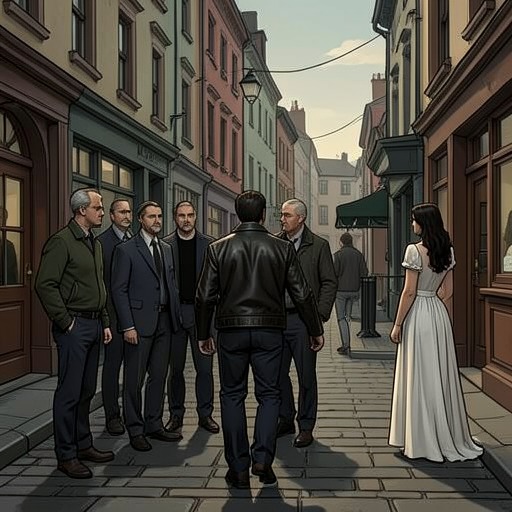
At the dance Tony arrives without a partner and feels out of place among the couples. The Jets and the Sharks seem equally alien to him; for a moment he considers leaving without being noticed. His withdrawal is interrupted when he sees Maria Nunez, standing against a wall in a white dress. She notices him too, and his impulse to go disappears. He approaches her as if drawn by a magnet, meets her dark eyes, and is carried into what the narration presents as another world.
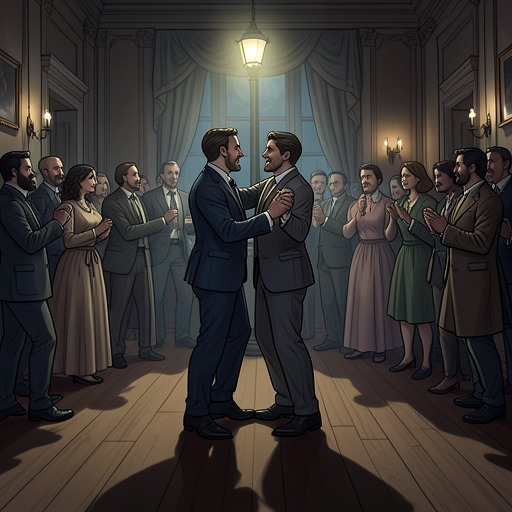
Their first contact develops through dance rather than explanation. As a slower record replaces the mambo, Tony takes Maria’s fingers gently and studies her face and white dress, which differs from what the other girls are wearing. He barely brushes her back; she rests a light hand on his shoulder. When he turns her and briefly tightens his hold, Maria shivers and begins to move away. Tony holds her for only a fraction of a second before releasing her. The brief hesitation captures the attraction and uncertainty of the encounter: physical closeness draws them together, but neither has yet made that closeness secure.
The Fight and Its Reversal
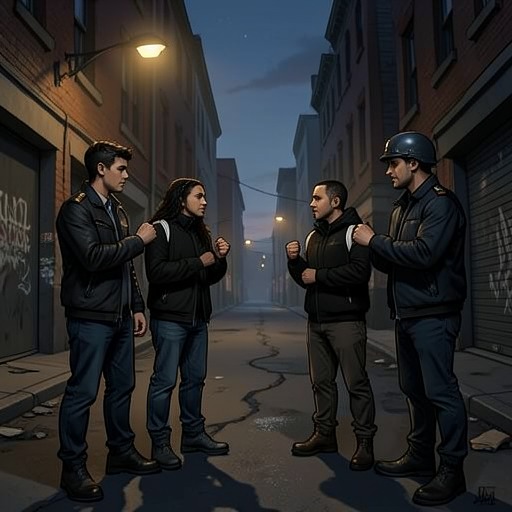
Tony later tells Maria that he has decided not to go to the fight. He plans to go home, dress, and come for her, and he insists that he stopped the fighting the previous night and that the coming contest will be only a fistfight. He believes Bernardo cannot be seriously hurt. The confidence of that assurance is overturned when the confrontation becomes lethal. During the fight, Riff Lorton makes a broad arm gesture as he orders Tony to move back; Bernardo uses the opening to drive his blade into Riff’s chest beneath the heart.
Riff is dead before he reaches the ground. Tony picks up the knife from Riff’s limp hand and charges Bernardo before he can defend himself. The blade enters Bernardo’s flank, and Bernardo collapses, mortally wounded. Tony’s act is immediate retaliation for the death of the friend he regards as a brother, but it makes him the killer of Maria’s brother and carries the violence he had meant to escape directly into his love for her. A police siren and patrol car scatter the Jets and the Sharks. Diesel pulls Tony away as Tony runs in tears, calling for Maria while the sirens answer him.
Reunion, Death, and Narrative Significance
When Chino Martin tells Maria that Tony has killed Bernardo, she refuses to believe him and strikes him, insisting that he is inventing the story. Her response makes the news a rupture not only in her family but in the future she had begun to imagine with Tony. When she and Tony meet, however, he does not conceal what happened. Weeping, he says that he truly tried to stop the others, that he does not know how the fight went wrong, and that he did not want to hurt Bernardo. He explains that Riff was like a brother to him and that Bernardo had killed Riff. Maria holds him as he breaks down, and they grieve together rather than pretending that love can undo the deaths.
Tony’s final effort to find Chino Martin ends in a bullet to the chest. As blood rises to his mouth, Tony believes he sees a white figure running toward him and calling his name. Maria reaches his body, weeping, and finds him dead. The white clothing recalls her appearance at the dance, when meeting her seemed to open a different world to Tony; at the end, the figure he sees cannot bring him out of the violence that has overtaken that possibility. Maria covers his eyes, then calls Chino closer and demands his pistol. Tony’s death closes his personal attempt to leave the Jets, but the final encounter also leaves Maria confronting the weapon and the man responsible. His arc makes the cost of the gang conflict intimate: the same bonds that give the violence its emotional force prevent his new life from remaining separate from it.